From the High Atlas Mountains and Sahara Desert to the Atlantic Coast. Explore guided mountain bike, gravel, road cycling, and e-bike adventures.
Part 1 – Where Every Great Ride Begins
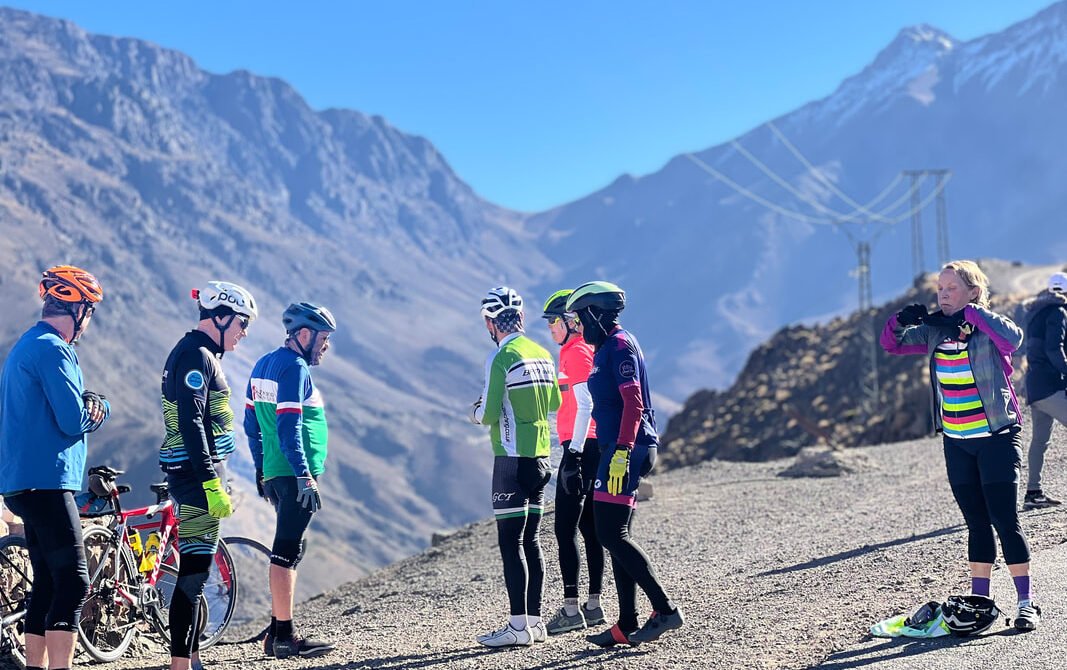
Bike Tour in Morocco: There is a moment, just before sunrise in the High Atlas Mountains, when Morocco belongs only to the mountains, the shepherds, and the cyclists willing to wake before the world.
The first sound is never traffic.
It is the distant call to prayer drifting gently across the valley, echoing from village to village as dawn slowly paints the peaks of Jebel Toubkal in shades of gold and pink. At 4,167 meters, North Africa’s highest mountain watches silently over a landscape that has changed little in centuries.
Outside a traditional Berber guesthouse in Imlil, mountain bikes rest against ancient walnut trees, their tires still carrying the dust of yesterday’s adventure. The air is cool, scented with wild thyme, juniper, and fresh bread baking in clay ovens. Somewhere nearby, a mule bell rings softly as a farmer prepares for another day in the terraced fields.
There are no crowds.
No souvenir stalls.
No tour buses waiting in line.
Only narrow stone paths winding between centuries-old homes, children walking to school with cheerful greetings of “Azul” or “Salam Alaikum,” and the quiet anticipation of another day on some of the most spectacular cycling terrain in the world.
This is the Morocco that most visitors never see.
While millions arrive each year to explore the vibrant souks of Marrakech or spend a night beneath the stars in the Sahara, relatively few venture into the heart of the Atlas Mountains on two wheels. Those who do quickly discover that Morocco is not just another cycling destination—it is an experience that blends adventure, culture, history, and human connection in a way few places on Earth can match.
For cyclists, every kilometer tells a story.
A winding gravel road may trace the route of an ancient caravan that once carried salt, spices, and textiles across the mountains. A narrow singletrack might follow paths worn smooth over generations by shepherds moving their flocks between seasonal pastures. A mountain pass that challenges your legs today has connected Berber communities for centuries.
Riding here is not simply about covering distance. It is about becoming part of a landscape shaped by time and tradition.
A Land Built for Adventure
Few countries offer the diversity that Morocco packs into a single day’s ride.
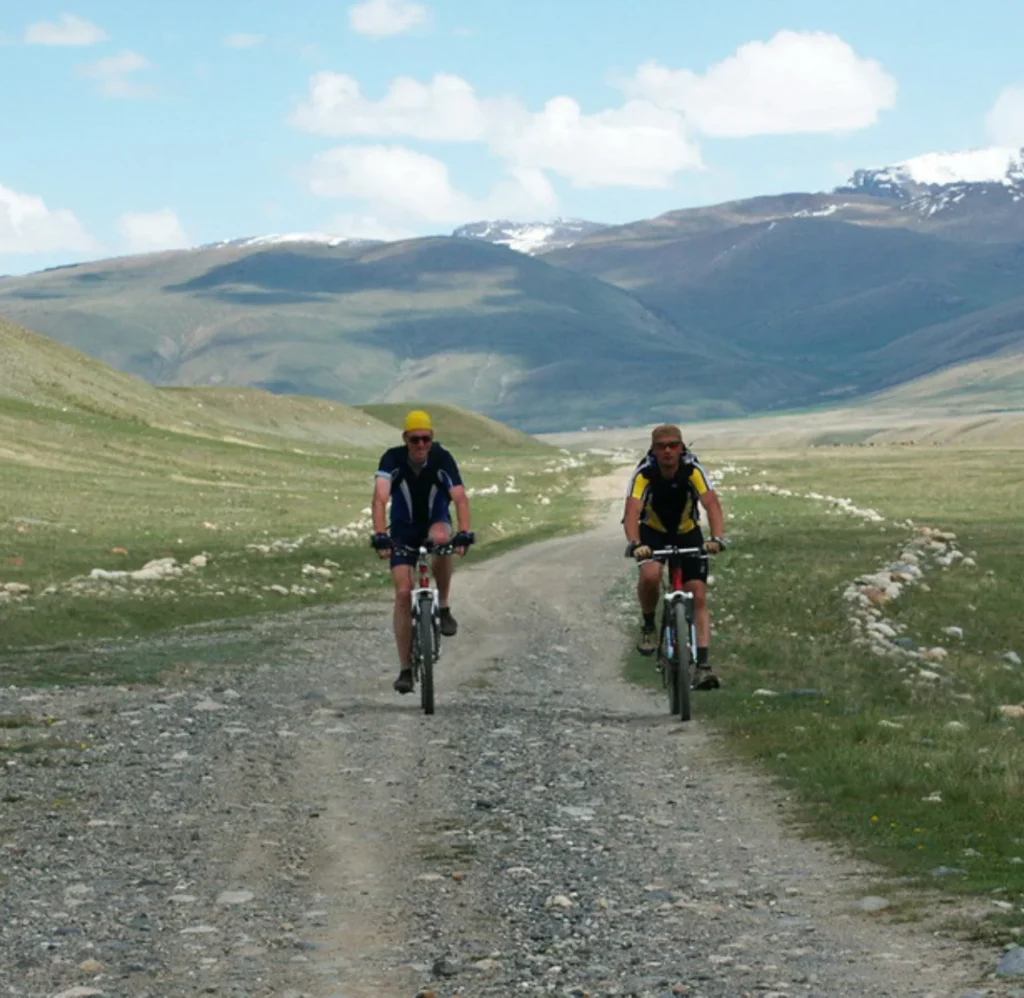
In the morning, you can climb through cool cedar forests beneath snow-capped peaks. By lunchtime, you may be descending into lush valleys filled with walnut orchards, apple trees, and terraced fields. Before sunset, the scenery transforms again into dramatic red-rock canyons, vast desert plains, or windswept Atlantic cliffs.
Each region has its own character, its own rhythm, and its own cycling style.
The High Atlas Mountains challenge experienced mountain bikers with technical descents, ancient mule trails, and breathtaking climbs.
The Anti-Atlas rewards gravel riders with endless dirt roads weaving through granite landscapes and remote Amazigh villages.
The Sahara offers unforgettable bikepacking adventures beneath enormous star-filled skies.
Along the Atlantic coast, road cyclists enjoy smooth tarmac, ocean breezes, and fishing villages where freshly grilled seafood becomes the perfect recovery meal.
Very few countries can offer mountain biking, gravel cycling, road riding, bikepacking, and cultural immersion within such a compact geography.
That variety is one of Morocco’s greatest strengths.
More Than a Bike Trip
Many cycling holidays are measured by numbers.
How many kilometers.
How much climbing.
Average speed.
Heart rate.
Power output.
Morocco invites you to measure your journey differently.
You remember the elderly woman who insisted you stop for mint tea even though you shared no common language.
You remember laughing with children who raced alongside your bike for a few hundred meters before waving goodbye.
You remember sharing warm bread baked that very morning, dipped into fragrant olive oil produced from trees that have stood for generations.
You remember hearing stories of mountain life from local guides whose families have called these valleys home for centuries.
Long after you forget the exact elevation gained or the average speed recorded on your cycling computer, these moments remain vivid.
That is what transforms a ride into a journey.
The Amazigh Spirit
To understand cycling in Morocco, you first need to understand the people who have shaped these mountains.
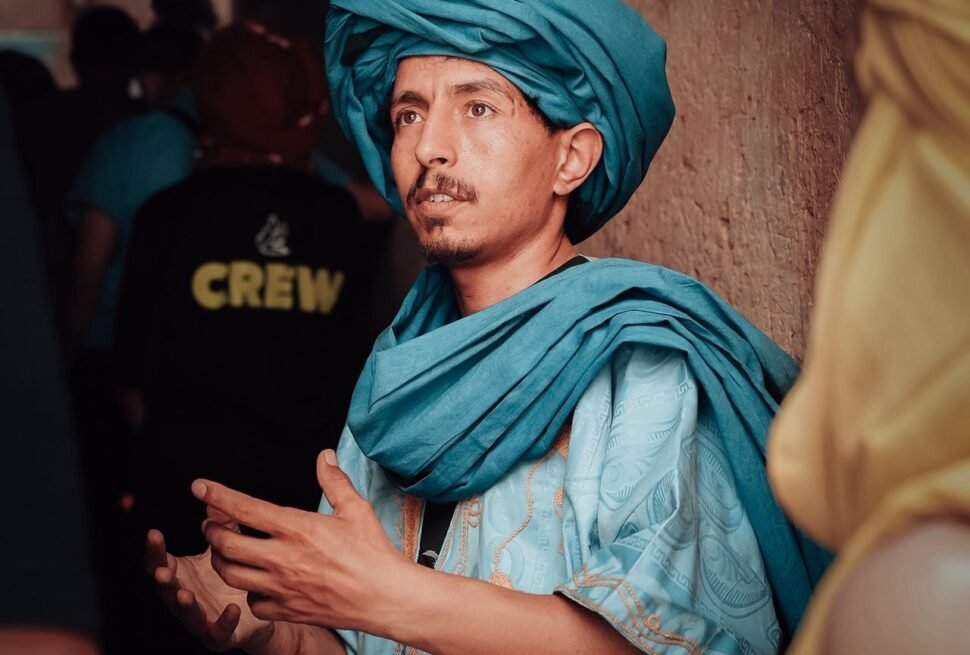
Long before modern borders existed, the Amazigh—often known internationally as Berbers—built thriving communities throughout North Africa. Their villages cling to mountainsides, blend naturally into the earth with stone and clay architecture, and reflect a remarkable ability to thrive in challenging landscapes.
Hospitality is not a tourism product here.
It is a deeply rooted cultural value.
A traveler arriving at a mountain home may be welcomed with sweet mint tea, homemade bread, local olive oil, seasonal fruit, and conversation, regardless of where they come from.
Cyclists experience this generosity every day.
It is common to be greeted by smiling villagers, offered directions, invited to rest in the shade, or simply encouraged with warm words as you tackle another mountain climb.
These small encounters often become the most meaningful memories of the trip.
Riding With People Who Call These Mountains Home
There is an important difference between visiting a destination and exploring it with people who belong to it.
Local knowledge changes everything.
A map may show a trail.
A local guide knows which family harvests saffron nearby.
They know where shepherds gather during spring.
They know the hidden spring where generations have filled their water bottles.
They know which bakery produces the valley’s best bread before sunrise.
They know the stories behind abandoned kasbahs, centuries-old irrigation channels, walnut groves, and mountain passes.
This knowledge cannot be downloaded from an app or copied from a guidebook.
It is lived.
It is inherited.
And it transforms every ride into something far richer than a simple cycling holiday.
Why the Best Bike Tours in Morocco Begin in Imlil
For many riders, the adventure starts in the small mountain village of Imlil, just over an hour from Marrakech.
Often called the gateway to Toubkal National Park, Imlil sits at the crossroads of countless trails leading into the High Atlas. Stone houses climb the hillsides, rivers rush through narrow valleys, and snow-fed streams nourish orchards of walnut, apple, cherry, and almond trees.
From here, cyclists can spend days exploring routes that connect villages such as Aroumd, Tamatert, Tizi Oussem, Ouirgane, Imi Oughlad, and many others—each with its own traditions, landscapes, and welcoming communities.
No two rides feel the same.
One day may involve technical singletrack and dramatic mountain descents.
The next may wind gently through fertile valleys, passing women weaving traditional carpets, farmers tending terraces, and children proudly shouting greetings as riders pass.
It is this variety—combined with genuine cultural immersion—that has made the Atlas Mountains one of Africa’s most exciting destinations for mountain biking and gravel cycling.
Part 2 – The Ancient Heart of Morocco: Riding Through a Land Shaped by History and Amazigh Culture
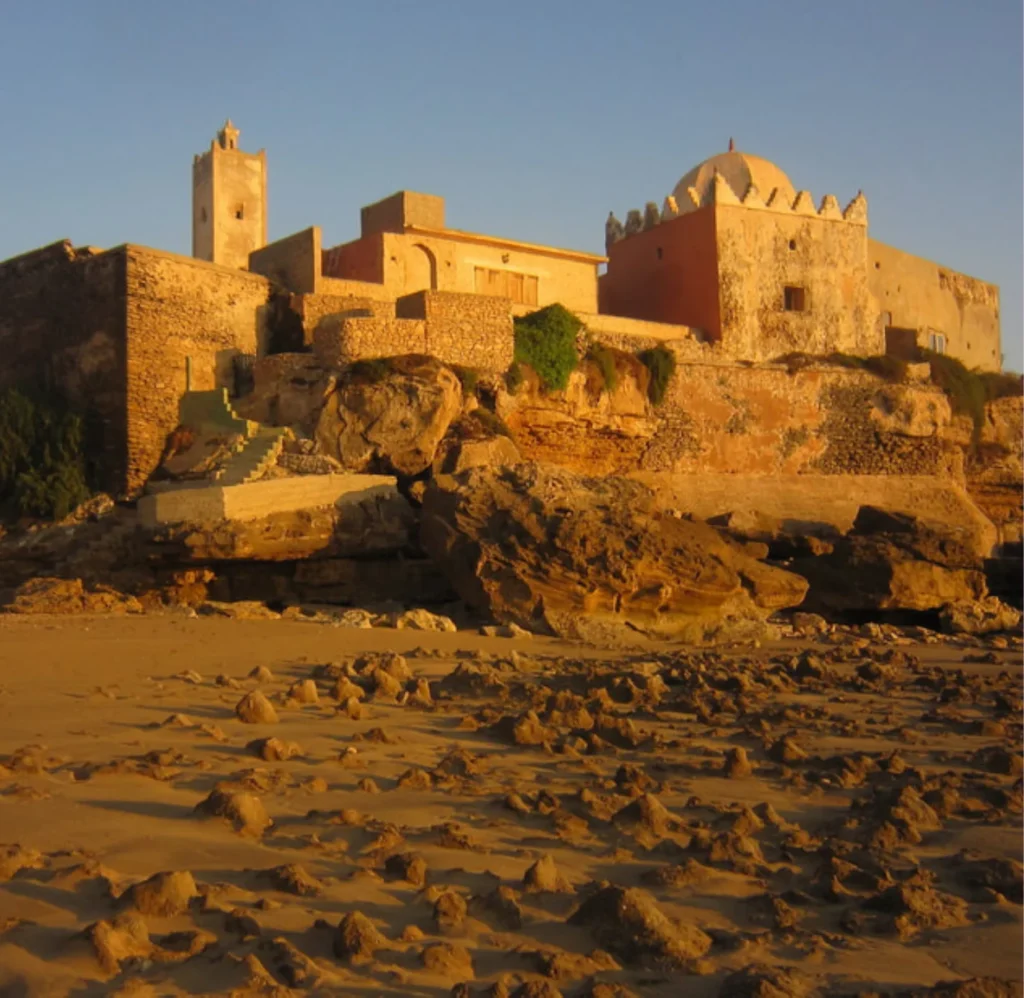
“Every mountain has a story. Every trail has a memory. Every village has protected a way of life that has endured for thousands of years.”
As your wheels roll over the smooth stones of an ancient mountain path, it is easy to think only about the next climb or the spectacular view waiting beyond the ridge.
But beneath your tires lies something far older than any modern cycling route.
Many of the trails that mountain bikers and gravel cyclists enjoy today were never built for bicycles. They were carved into the mountains by generations of Amazigh shepherds, merchants, travelers, and families long before the invention of the mountain bike. Some sections have connected villages for hundreds of years, while others follow trade routes that have linked North Africa with the Sahara and beyond for more than a millennium.
When you ride in Morocco, you are not simply exploring a landscape—you are following the footsteps of history.
The Amazigh: Guardians of the Atlas Mountains
Long before the Phoenicians sailed along Morocco’s Atlantic coast, before the Romans established settlements in North Africa, and centuries before the Arab dynasties transformed cities like Marrakech and Fez into centers of learning and trade, the Amazigh people were already living among these mountains.
The word Amazigh means “free people.”
It is a name that reflects both identity and resilience.
For thousands of years, Amazigh communities have adapted to the challenges of mountain life. They developed sophisticated irrigation systems, built fertile terraces from steep slopes, and created villages using stone, earth, and timber gathered from the surrounding landscape. Their homes blend naturally into the mountains, as if they have grown from the land itself.
Unlike many civilizations whose monuments dominate history books, the Amazigh legacy is found in everyday life. It lives in the language spoken around family tables, in traditional music played during celebrations, in intricate carpets woven by hand, and in the warm hospitality extended to every guest.
Today, cycling through the High Atlas offers a rare opportunity to experience this living culture rather than simply observe it from a distance.
The Mountain Villages That Time Forgot
One of the greatest surprises for first-time visitors is how authentic many Atlas villages remain.
There are places where life still follows rhythms that have changed little for generations.
At dawn, farmers lead their mules to terraced fields.
Women bake bread in communal clay ovens.
Children walk narrow stone paths to school.
Shepherds guide goats and sheep across mountain pastures.
Streams fed by melting snow continue to irrigate orchards of walnut, cherry, apple, and almond trees through ingenious channels maintained by local families.
For cyclists, these villages are far more than scenic photo stops.
They are reminders that the Atlas Mountains are not an outdoor museum. They are home to communities whose traditions remain deeply connected to the land.
As you pause beside a small village fountain to refill your water bottle, you may find yourself sharing smiles with elderly residents sitting beneath walnut trees or exchanging greetings with children eager to practice a few words of English, French, or Spanish.
These simple encounters often become the moments riders remember most vividly.
Hospitality That Cannot Be Taught
In many parts of the world, hospitality has become a service.
In Morocco, it remains a tradition.
A glass of mint tea is rarely just a drink.
It is an invitation.
A welcome.
A gesture of respect.
Across the Atlas Mountains, visitors are often welcomed with sweet mint tea poured gracefully from silver teapots held high above delicate glasses. Alongside it comes freshly baked bread, local olive oil, homemade honey, or seasonal fruit harvested only hours earlier.
No one asks where you are from before offering you tea.
No one checks whether you have booked a table.
Generosity is simply part of everyday life.
Cyclists experience this warmth repeatedly during their journey.
Whether stopping at a family-run guesthouse, a mountain café, or a village cooperative, the feeling is the same: you are treated less like a customer and more like a guest.
That spirit of hospitality is one of Morocco’s greatest treasures.
Ancient Trade Routes Beneath Your Wheels
Centuries ago, before modern roads crossed the High Atlas, caravans carried goods between Marrakech, the Sahara, and the imperial cities of the north.
Salt from desert mines.
Gold from West Africa.
Leather from Fez.
Dates from the Draa Valley.
Spices from distant markets.
These caravans traveled slowly across mountain passes that today have become extraordinary cycling routes.
Many of the gravel roads winding through the Atlas follow these ancient trade corridors.
Imagine standing at the summit of a mountain pass after a long climb.
The silence is almost complete.
Only the wind moves through the juniper trees.
Then your guide points toward a narrow trail disappearing into the valley below.
“For hundreds of years,” he says, “this was the only route connecting these villages.”
Suddenly, the descent becomes more than a trail.
It becomes part of a much larger story.
Marrakech: Where Every Journey Begins
Almost every cycling adventure in the Atlas Mountains begins in Marrakech.
Founded nearly a thousand years ago, the city has welcomed travelers, merchants, scholars, and explorers from across Africa, Europe, and the Middle East for centuries.
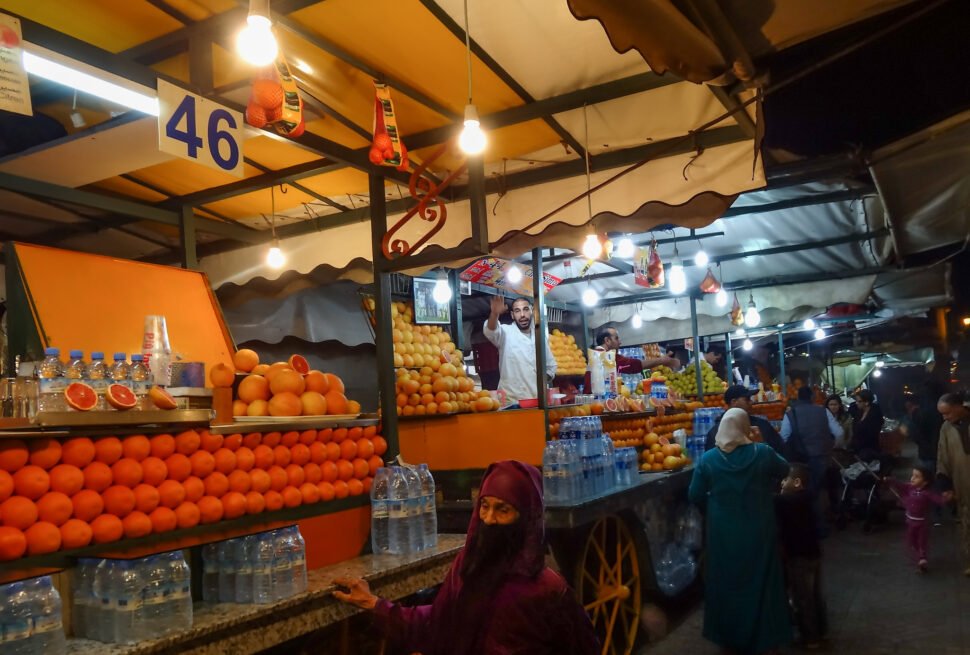
Its famous medina is a maze of narrow streets filled with artisans hammering brass, carving cedar wood, dyeing leather, weaving carpets, and selling fragrant spices.
For cyclists arriving from Europe or North America, Marrakech provides an unforgettable contrast.
One day you are wandering vibrant souks beneath ancient walls.
The next, you are climbing peaceful mountain roads where the only sounds are birdsong and distant waterfalls.
Few destinations offer such dramatic transitions within such a short distance.
The Rhythm of the Seasons
Life in the Atlas Mountains is deeply connected to the seasons.
Spring transforms the valleys into a mosaic of wildflowers and blossoming fruit trees.
Summer brings long days ideal for high-altitude riding.
Autumn fills orchards with ripe apples and walnuts, while vineyards and fields prepare for harvest.
In winter, snow blankets the highest peaks, creating breathtaking scenery unlike anything most visitors expect to find in Africa.
For local communities, each season has its own celebrations, traditions, and agricultural rhythms.
For cyclists, it means every visit reveals a different face of Morocco.
No two rides—even on the same trail—are ever quite the same.
More Than a Destination
Many travelers arrive expecting beautiful scenery.
They leave remembering the people.
The guide who stopped to introduce them to his grandparents.
The baker who insisted they taste warm bread fresh from the oven.
The children laughing as they raced alongside the bikes.
The shepherd who shared stories beneath the shade of an ancient walnut tree.
The elderly woman weaving a carpet whose patterns have been passed down through generations.
These encounters cannot be scheduled.
They cannot be manufactured.
They happen because Morocco remains a place where everyday life continues much as it always has.
For cyclists seeking more than a physical challenge, this is what transforms a holiday into a journey of genuine connection.